AI-generated video production has rapidly evolved from simple slideshow animation into advanced cinematic content creation. A modern AI photo video maker can now animate still images, generate realistic camera motion, maintain character consistency, and even produce commercial-quality marketing videos from a single uploaded photo.
These platforms are increasingly used by marketers, e-commerce sellers, YouTubers, educators, agencies, and social media creators looking to speed up production while reducing editing complexity. Some tools focus on avatar videos and presentations, while others prioritize cinematic realism or viral social media content.
Below are five of the most widely used AI photo video maker platforms currently shaping the image-to-video generation landscape.
1. Pollo AI Photo Video Maker
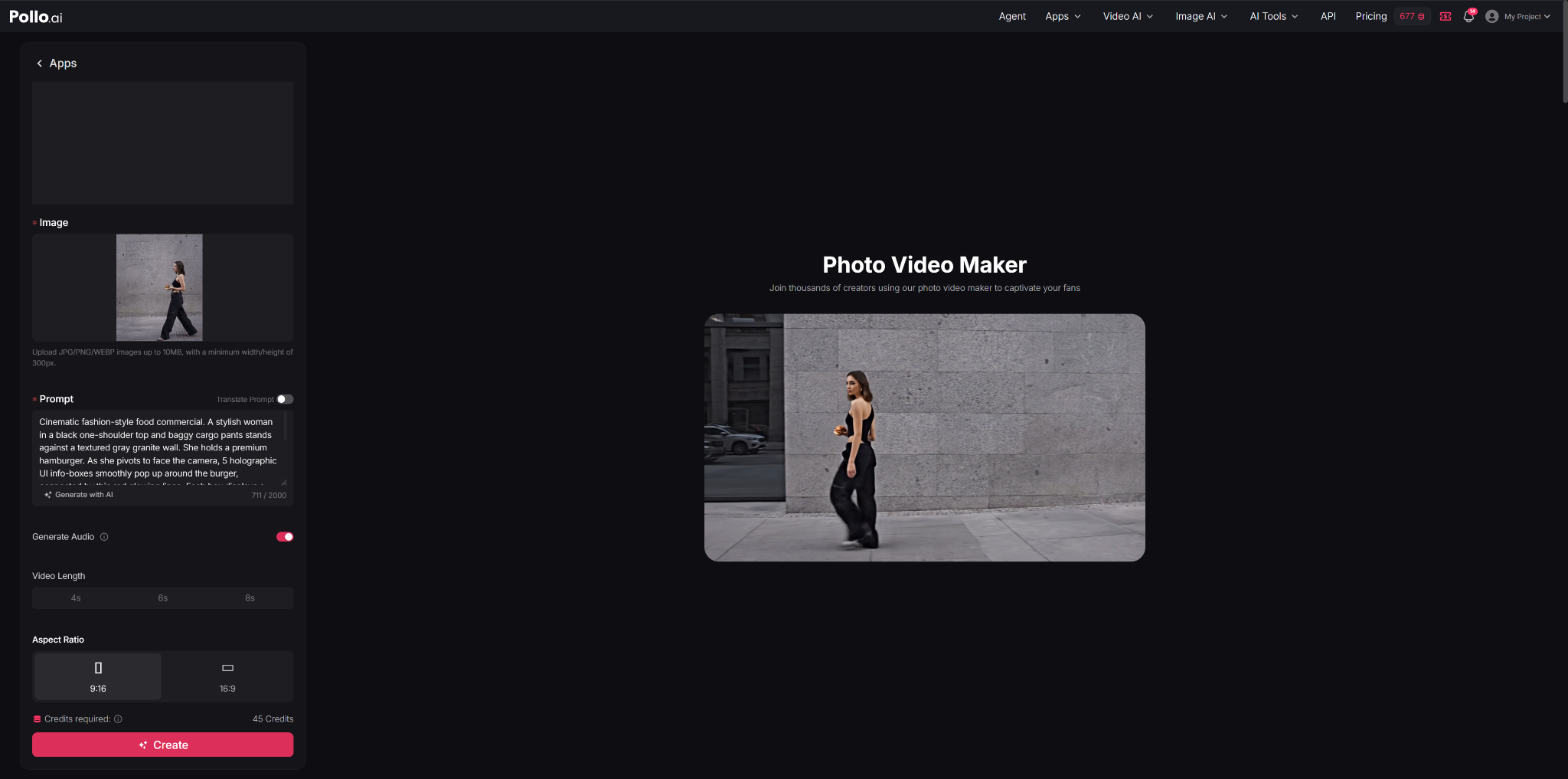
Pollo AI is an all-in-one AI photo video maker built specifically for commercial advertising, branded content production, and scalable short-form marketing videos. Rather than functioning as a single-purpose image animation tool, the platform operates as a large-scale AI creative ecosystem that combines image-to-video generation, text-to-video workflows, reference-based video consistency, AI avatars, AI video editing, and multiple business-focused creative apps inside one unified interface. Its overall positioning is geared toward creators, marketers, agencies, e-commerce brands, and businesses that need to produce high-volume video content efficiently without relying on traditional filming or complex editing software.
One of the platform’s strongest capabilities is its dedicated Image to Video AI system, which allows users to transform one or multiple photos into cinematic animated clips. The AI can generate realistic motion, anime scenes, 3D-style visuals, cartoon animation, and commercial product videos while maintaining visual consistency across frames. Users can also control motion prompts, aspect ratios, video length, and visual styles directly inside the workflow. Beyond standard video generation, Pollo AI includes specialized tools such as UGC Video Ads, Product Video generation, Clone Viral Video, Testimonial Video, AI Facebook Video Maker, Travel Video Maker, and YouTube Shorts creation, making it suitable for both social media and commercial campaigns.
Why Choose Pollo AI Photo Video Maker
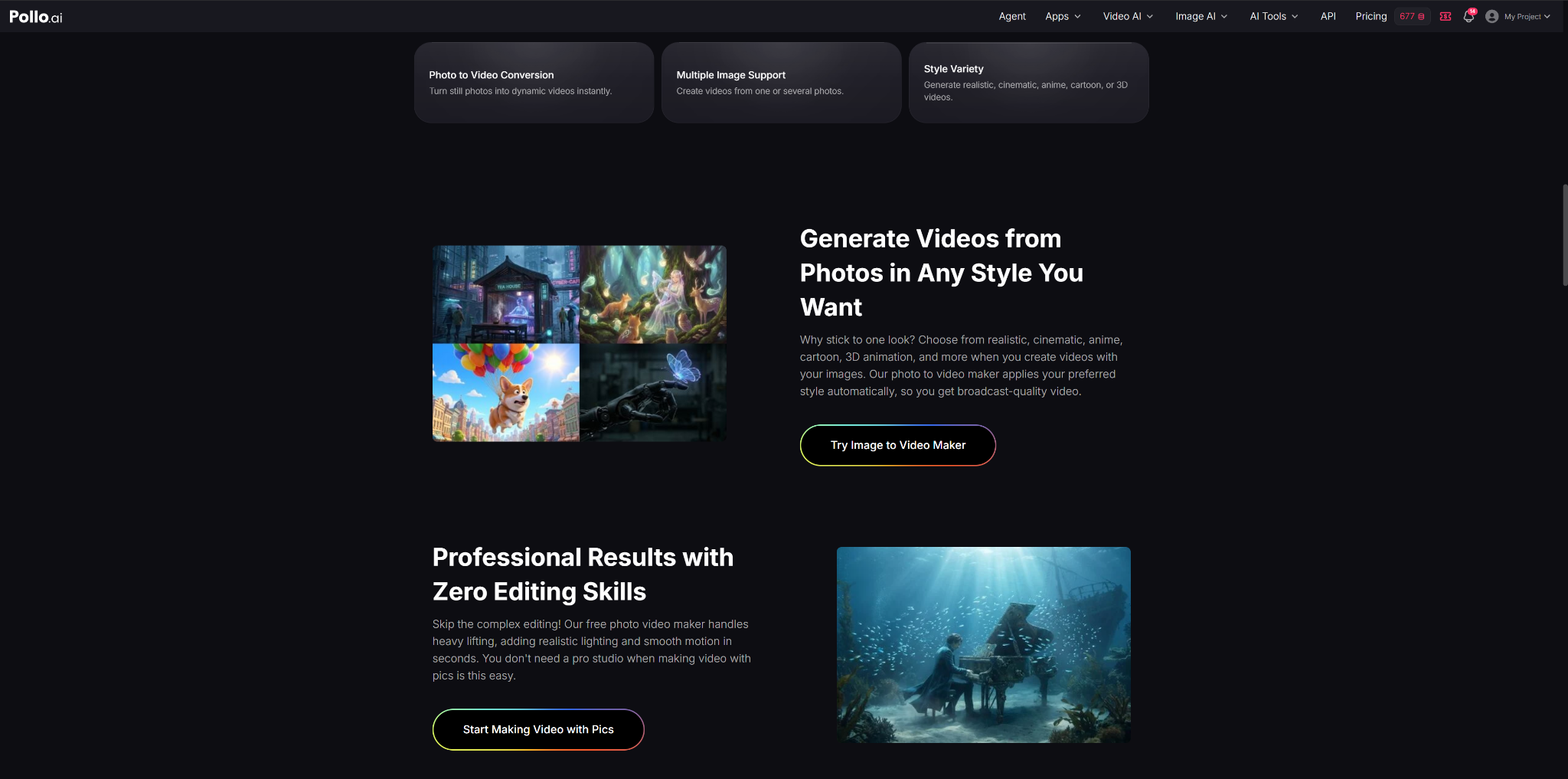
One of the key advantages of Pollo AI is the sheer variety of supported AI models and production workflows available in one place. Instead of locking users into a single generation engine, the platform integrates models like Kling AI, Runway, PixVerse AI, Seedance 2.0, Veo 3, Hailuo AI, and Pika AI. This allows creators to experiment with different rendering styles and motion behaviors without switching platforms. Acting as a highly flexible Instagram video maker alongside its broader AI video ecosystem, the platform helps businesses rapidly produce visually optimized short-form content for social campaigns. For brands managing high-volume content pipelines, the ability to generate multiple creative variations from one image can significantly speed up testing and campaign production.
The platform is also structured around practical business use cases. E-commerce sellers can create cinematic product showcases from static product photos, while real estate marketers can turn property images into virtual video tours without hiring a videographer. Social media teams can generate multiple video styles for TikTok, Instagram, Facebook, and YouTube while maintaining consistent branding across campaigns. Another strength is accessibility: the interface is intentionally simplified, allowing beginners to create polished videos without advanced editing knowledge. Features like AI motion automation, built-in style presets, and automatic lighting enhancement reduce the learning curve substantially, making the platform useful for both experienced marketers and first-time content creators.
My Tips: Pollo AI works best for short-form and marketing-oriented content, but users creating highly detailed cinematic narratives may still need additional post-editing for maximum scene consistency.
2. HeyGen
HeyGen is primarily known for AI avatar generation and presentation-style videos. Unlike platforms centered on cinematic image animation, HeyGen focuses on transforming portrait images into realistic talking presenters with synchronized lip movement and AI-generated narration. The platform is commonly used for training videos, onboarding materials, online education, multilingual business communication, and marketing explainers.
Its workflow is designed around simplicity and scalability. Users can upload a portrait photo, type a script, select a voice, and generate a presenter-style video in minutes. The system supports multiple languages and voice styles, making it particularly attractive for businesses producing international content. Rather than emphasizing visual experimentation or artistic animation, the platform prioritizes clarity, speed, and professional communication workflows.
Why Choose HeyGen
One of HeyGen’s biggest strengths is its practical business orientation. Teams that regularly create tutorials, customer support videos, HR onboarding materials, or educational content can scale production quickly without organizing traditional filming sessions. The AI avatar system reduces the need for cameras, lighting setups, actors, or editing crews, making repetitive video production significantly more efficient.
The platform is also useful for creators building faceless YouTube channels or presentation-driven social media content. Its multilingual support and realistic lip-syncing help businesses localize campaigns for different markets while maintaining visual consistency. The template-driven workflow also makes it accessible to users with no prior video editing experience, which is a major advantage for smaller teams and solo creators.
My Tips: HeyGen performs best for presenter and avatar-based videos, but users seeking cinematic storytelling or highly dynamic visual effects may find the creative flexibility somewhat limited.
3. Runway Gen-3 Alpha
Runway has established itself as one of the most influential names in generative AI filmmaking. Runway Gen-3 Alpha is particularly recognized for cinematic image-to-video generation, advanced motion interpretation, and stylized visual storytelling. Instead of focusing mainly on social media templates or avatar videos, the platform is aimed at creators who want more artistic control over AI-generated scenes.
The platform supports both text-to-video and image-to-video workflows, allowing users to create highly stylized sequences with dynamic camera movement, lighting effects, environmental motion, and cinematic transitions. Its editing ecosystem also extends beyond generation itself, offering tools for refining clips and integrating AI footage into broader production workflows. This makes it popular among digital artists, filmmakers, designers, and experimental content creators.
Why Choose Runway
Runway’s main strength lies in its cinematic quality and creative flexibility. Users can create surreal visuals, short films, concept trailers, music visuals, and atmospheric storytelling clips with a level of motion realism that stands out in the AI video space. The platform’s AI camera simulation and scene interpretation often produce more immersive outputs compared to simpler social-media-focused generators.
Another advantage is the hybrid production workflow. Instead of functioning only as a generation engine, Runway bridges AI generation with professional editing capabilities. This allows creators to combine generated assets with traditional filmmaking techniques inside one environment. For artists and production teams experimenting with AI-assisted filmmaking, this integrated workflow can significantly reduce production time while preserving creative control.
My Tips: Runway delivers impressive cinematic results, but its advanced controls and creative workflow may require more experimentation than beginner-focused AI video generators.
4. Pika
Pika became popular largely because of its lightweight workflow and social-media-friendly animation style. The platform is optimized for short-form creators who need visually engaging clips without investing significant time into editing. Instead of complex production pipelines, Pika emphasizes speed, accessibility, and fast visual experimentation.
Users can upload photos and quickly transform them into animated clips featuring cinematic zooms, stylized effects, object motion, and AI-enhanced transitions. The interface is intentionally beginner-friendly, making it approachable for TikTok creators, meme editors, influencers, and casual content producers. The platform also supports multiple visual styles, helping users create more eye-catching social posts with minimal technical effort.
Why Choose Pika
One of Pika’s biggest advantages is how quickly creators can generate content variations. Social media teams often need multiple versions of the same video for testing engagement, trends, and audience reactions, and Pika’s streamlined workflow supports that kind of rapid iteration well. Instead of spending hours adjusting timelines manually, users can create multiple AI-generated concepts from a single image within minutes.
The platform is also effective for creators who prioritize entertainment-focused content rather than polished commercial production. Meme animations, stylized edits, reaction clips, and trend-based short videos fit naturally into Pika’s workflow. Its fast rendering process and simplified controls make it especially appealing for creators who post frequently across TikTok, Instagram Reels, and YouTube Shorts.
My Tips: Pika is excellent for short-form social content, but creators needing high-end cinematic realism or detailed scene consistency may eventually outgrow its simplified workflow.
5. Kling AI
Kling AI gained widespread attention because of its strong focus on realism and advanced motion simulation. The platform is known for producing AI-generated videos with fluid character movement, cinematic depth, environmental interaction, and realistic physics. Compared to many early AI animation systems, Kling AI places more emphasis on natural motion behavior and scene coherence.
The platform supports image-to-video generation through prompt-driven workflows, allowing creators to transform static visuals into dynamic cinematic sequences. Many users experiment with storytelling clips, realistic human motion, concept trailers, and atmospheric visuals that resemble live-action footage. Its outputs often feel more grounded and physically believable than heavily stylized AI video tools.
Why Choose Kling AI
Kling AI is particularly attractive for creators prioritizing realism over speed. The system’s ability to generate cinematic motion, detailed lighting interactions, and natural scene transitions makes it useful for advanced concept videos, experimental filmmaking, and visual storytelling projects. Many creators also use Kling AI to prototype commercial visuals before moving into full production.
Another advantage is its growing reputation within the AI creator community for visual quality. As more creators seek realistic AI-generated footage instead of exaggerated animation styles, Kling AI continues to attract attention for its cinematic rendering capabilities. Users comfortable with iterative prompting can often achieve highly polished outputs with strong visual immersion.
My Tips: Kling AI can generate visually impressive results, but rendering times and prompt experimentation may require more patience compared to simpler AI photo video maker platforms.
Final Thoughts
The best AI photo video maker depends heavily on the type of content being produced. Pollo AI offers one of the broadest feature ecosystems for creators and businesses, while HeyGen focuses more on AI avatars and business communication. Runway targets cinematic storytelling, Pika emphasizes rapid social media creation, and Kling AI prioritizes realism and advanced motion generation.
As AI video technology continues evolving, these platforms are expected to improve scene consistency, motion realism, editing control, and generation speed even further. For creators exploring image-to-video production in 2026, each of these AI photo video maker tools represents a different creative direction worth testing.